
🌈 The Courage to Be Seen: Understanding the Coming Out Process in 2025
Posted on Sat 11 Oct 2025 · by Dr. Gregory Canillas
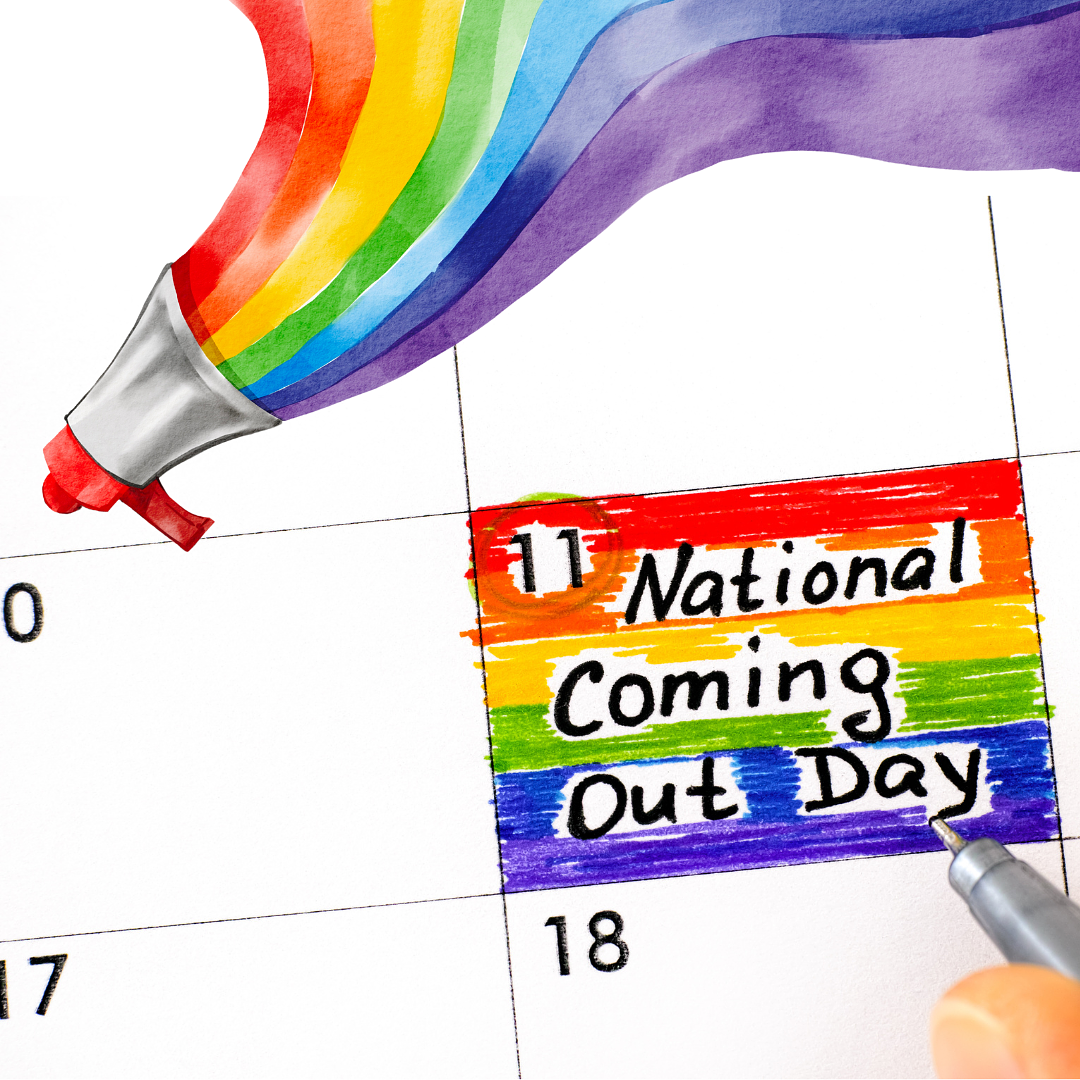
Every October, as the air shifts and the year begins to wind down, a quiet celebration takes place across the nation: LGBTQ History Month. It’s a time to honor the trailblazers who paved the way, to reflect on how far we’ve come, and to recognize how far we still have to go. Within this month sits National Coming Out Day—celebrated on October 11—a day rooted in the audacious belief that visibility changes hearts, minds, and policies.
Coming out has long been a rite of passage for LGBTQ+ individuals—a moment where identity meets declaration. But in 2025, this process looks and feels different. For some, it’s a joyful unveiling shared on social media. For others, it’s a quiet truth lived authentically but privately, whispered to a trusted few or embodied in daily life without explanation. And for many—especially those navigating cultural, religious, or political realities—it’s still dangerous.
This week, we honor every person who’s ever faced the question, “Do I share who I am?” Because whether your answer is yes, no, or not yet—your truth remains sacred.
🌱 Coming Out: From Moment to Lifelong Process
Coming out isn’t a single conversation. It’s a lifelong process of self-acceptance, integration, and sometimes negotiation. Psychologists describe this as a journey through identity formation, where an individual moves from awareness to acceptance to integration.
But unlike the myths that surround it, coming out isn’t always linear. For some, it happens in stages—first to oneself, then to trusted friends, and later to family or colleagues. For others, it’s interrupted by fear, faith, or circumstance.
And let’s be clear: no one owes anyone their story. Visibility is powerful, yes—but so is survival. Choosing not to come out publicly does not make you less brave, less authentic, or less valid. It means you’re navigating your safety, your family, your community, and your livelihood in the ways you know best.
Authenticity doesn’t always mean announcing who you are. Sometimes, it means allowing yourself to be—all parts of you, in harmony.
📜 The Roots of National Coming Out Day
National Coming Out Day was founded in 1988, one year after the Second National March on Washington for Lesbian and Gay Rights. Activists Robert Eichberg and Jean O’Leary wanted to create a day that would celebrate coming out as both a personal milestone and a political act. Their belief was simple: when people know someone who is LGBTQ+, they’re more likely to support equality.
That belief still holds true today. Study after study shows that personal connection drives empathy. Visibility, while never required, can be transformative—not only for the one who comes out, but for the world around them.
Still, we must remember the context in which we live. In the late 1980s, coming out meant risking jobs, homes, and safety. In 2025, many of those risks remain—especially for trans and nonbinary people, queer youth, and people of color living in areas where anti-LGBTQ+ sentiment is rising.
So as we celebrate, we also recommit—to advocacy, to policy reform, and to ensuring that no one has to choose between truth and safety.
🔄 The Many Faces of Coming Out
There isn’t just one kind of “out.” People come out in different ways, at different times, and for different reasons.
Publicly out: Those who share their identity openly and use their voice for visibility, activism, or representation.
Selectively out: Individuals who share their truth with trusted circles but maintain privacy in certain settings (e.g., work, church, or family).
Not out (yet or ever): People who, for personal, cultural, or safety reasons, keep their orientation or gender identity private.
Each of these paths is valid. Authenticity is not measured by visibility. It’s measured by alignment—the degree to which your inner truth and outer life can coexist peacefully.
And sometimes, being out privately is the truest form of self-preservation. Especially in today’s climate, where being LGBTQ+ can still invite hostility, violence, or discrimination, protecting oneself is an act of wisdom, not shame.
⚖️ Coming Out in Today’s United States
In 2025, coming out means something different than it did even five years ago. We are living through a paradox—greater representation in media, more inclusive workplaces, and record numbers of openly LGBTQ+ elected officials, yet also an alarming rise in anti-LGBTQ legislation.
More than a dozen states have proposed or passed bills restricting discussions of gender identity and sexual orientation in schools. Others are targeting healthcare for trans youth, banning drag performances, or erasing queer voices from libraries.
For young people growing up in these environments, the message is clear: silence equals safety. And yet, silence also suffocates. This tension—between the desire to live freely and the instinct to protect oneself—defines the modern coming out landscape.
That’s why communities, schools, and families matter more than ever. When we create affirming environments, we lessen the cost of authenticity.
💜 Intersectionality: Identity Within Identity
For many LGBTQ+ people, queerness is just one layer of who they are. Race, faith, immigration status, ability, and socioeconomic class all shape how and when one might come out.
A queer Black man raised in a conservative church may wrestle with different fears than a white lesbian in an affirming city. A trans Latina may face unique cultural pressures from her family or community. Queer immigrants may risk deportation or rejection if they reveal their truth.
To honor National Coming Out Day fully, we must honor the diversity of the LGBTQ+ experience. There is no universal queer story—only individual truths, stitched together by courage.
🫶 The Role of Allies: Love Without Condition
If you’re not LGBTQ+, this day is still for you. Because being an ally is not a title—it’s a practice.
Here are a few ways you can show up:
- Listen more than you speak.
- Believe people when they share their truth.
- Respect pronouns and names, even when they change.
- Challenge bias, especially in rooms where queer voices are absent.
- Create space, not pressure. Don’t force someone to come out before they’re ready.
Most importantly, love without condition. Coming out is less about being known and more about being safe to be known.
🧘🏾♂️ Coming Out to Yourself
Before any public declaration, there’s a private reckoning—the moment you whisper the truth to yourself. That moment is holy.
It’s when you stop arguing with your soul and start listening to it. When you accept that who you are is not a flaw to be fixed but a facet of your brilliance.
For many, this stage is the hardest. It involves grieving expectations, unlearning shame, and building a new relationship with self. But it’s also the most liberating. Because once you see yourself clearly, no amount of external judgment can unmake that vision.
So whether your coming out happens in a parade or a prayer, a group chat or a journal—celebrate it. It’s a moment of integration, a homecoming to your truest self.
💬 The Ongoing Journey
Coming out doesn’t end with one announcement. It’s a continual act of truth-telling in a world that often rewards conformity. Every new job, friend group, or family event may invite the question again. And each time, you decide what safety and authenticity look like in that context.
That’s why grace is essential—grace for yourself, and for others on different timelines. No two journeys unfold the same way. And that’s okay.
💗 The Soul 2 Soul Global Connection
At Soul 2 Soul Global, we believe love—in all its forms—deserves celebration. Whether you’re out loud or out quietly, single or partnered, questioning or certain, our mission is to help you build relationships grounded in authenticity, reciprocity, and joy.
Through workshops, retreats, and coaching, we create spaces where every identity is honored, every story is valid, and every soul can rest in truth.
Your path doesn’t have to look like anyone else’s. The only requirement is honesty—with yourself first, and others as you choose.
🌈 Final Reflection: You Are Enough
To anyone reading this who’s still on the fence—wondering if the world will love you when you’re fully seen—let this be your reminder:
You are already whole.
You are already worthy.
You are already loved.
Coming out is not about changing who you are. It’s about stepping into alignment with the truth that’s been there all along.
Whether you whisper it, write it, or shout it from rooftops, your story is yours to tell. And when you do, know that an entire community stands with you—in purple, in pride, in power.
You belong.
Love & Light,
Doc