
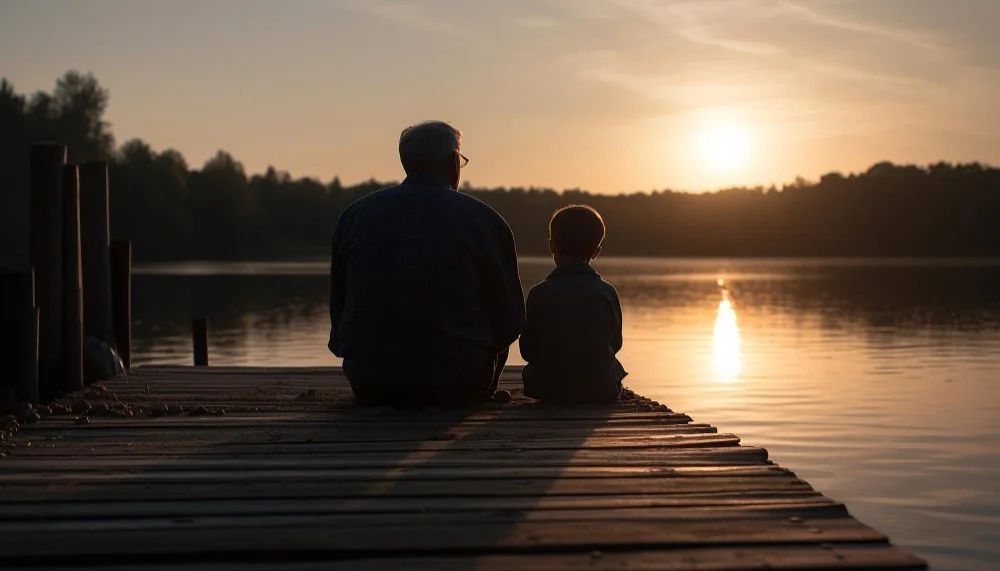
Yesterday, I had the honor of presenting at the ICAN Childhood Grief and Traumatic Loss Conference, where I spoke to a room filled with passionate clinicians, educators, and mental health professionals. Our topic? One that doesn’t get nearly enough attention: how unresolved childhood grief shapes adult romantic relationships—and how we can move from silent suffering to transformative healing.
Childhood Grief Is Not Just About Death
When we think of childhood grief, we often imagine a child who has lost a parent or sibling to death. And yes, these are profound losses that deserve acknowledgment. But grief is broader and more complex than that.
Childhood grief also includes:
Parental separation or divorce
Incarceration or deportation of a caregiver
Being placed in foster care or adopted
Community violence or displacement
Emotional abandonment or chronic illness in the home
These are what we call ambiguous or disenfranchised losses—grief that is real but not always recognized by others. When a child’s pain goes unacknowledged, it doesn’t disappear. It buries itself deep in the nervous system, only to resurface later in adult relationships.
Marcus’ Story: When Grief Goes Underground
During the session, I shared a clinical vignette about Marcus, a 36-year-old African American man who entered foster care at age six after the sudden death of his mother. He experienced multiple placements before emancipating from the system at 18. Outwardly, he’s successful—working in nonprofit leadership, college educated, funny, driven.
But Marcus came to therapy because, in his words, “I don’t think I ever learned how to love right.”
He had just ended another promising relationship—the third in six years—and saw a pattern: each time a partner got too close or conflict arose, Marcus emotionally shut down or left.
This is the survival strategy of a child who had no one to help him grieve.
What Happens When Grief Goes Unresolved?
Unresolved childhood grief doesn't stay in the past. It shows up in how we give, receive, and block love.
Some of the most common grief adaptations we see in adult romantic relationships include:
Fear of Abandonment: Clinginess, jealousy, or self-sabotage.
Emotional Shutdown: Withdrawing from intimacy to protect the self.
Hyper-Independence: Avoiding vulnerability because it was unsafe.
Recreating Familiar Pain: Choosing partners who echo original wounds.
Grief Through an Intersectional Lens
Grief is experienced differently across racial, cultural, gender, and sexual identity lines. Black boys, for example, are often socialized to be stoic. Queer children may grieve the loss of safety or belonging. The further someone is from societal privilege, the more likely their grief has gone unacknowledged.
What Healing Actually Looks Like
Grief work is not about pathology. It’s about liberation.
Healing can include:
Grief Acknowledgment: Naming what was lost.
Attachment Repair: Creating safety in relationships.
Embodied Grief Work: Breathwork, somatic healing.
Creating New Narratives: Rewriting the stories grief told us.
From Grief to Growth
Grief is not just about what was lost. It’s also about what you still long for.
Marcus, like many of us, is still learning how to love. But now, he’s not doing it alone. And that makes all the difference.
Soul 2 Soul Global: A Home for Healing
At Soul 2 Soul Global, we work with individuals, couples, and communities seeking deeper emotional connection, healing, and relationship transformation. Our services include:
Individual and Couples Coaching
Clinical Trainings and Keynotes
Retreats and Virtual Workshops
To anyone who has felt like Marcus—shut down, unseen, unsure how to love—let me say this:
You are not broken. You are grieving. And grief doesn’t mean the end of love. It means love still lives in you.
We can help you find your way back to it.
Love & Light,
Doc
Learn more at www.soul2soulglobal.com